Contact Us

Property Week Q&A with Long Harbour's Jack Spearman: looking to scale single family housing portfolio
Jack Spearman, MD of Single Family, tells Property Week's Lewis Berrill about growth of the sector and Long Harbour's focus on the South and South East
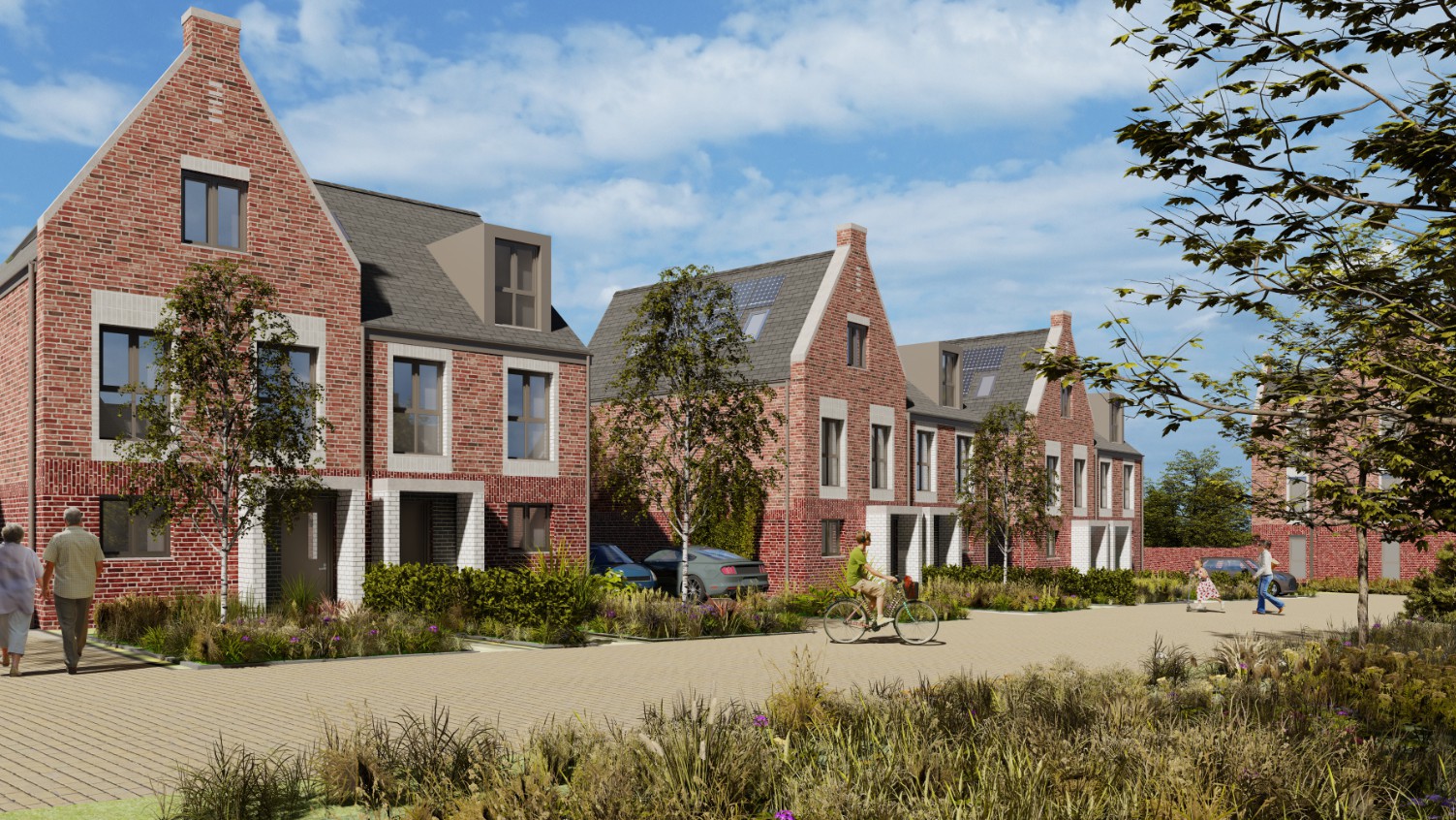
Long Harbour is among the leading investors in single family housing (SFH) and has committed to deploy £1.2bn into the sector on behalf of its Single Family Housing Fund, with a focus on the South of England.
Since its inception in 2023, the fund has financed hundreds of homes. Long Harbour is looking to bring both domestic and international investment to the UK’s undersupplied housing market, where build to rent is playing a growing role and financing for diverse types of tenures is vital
to increase supply.
Jack Spearman, the firm’s managing director of SFH, tells Property Week about its plans to continue scaling the fund portfolio and meet deployment targets.
How would you describe the state of the UK SFH market and why is the sector attractive to investors?
It has moved to a market where we are seeing core and core-plus capital trying to access at the point of development rather than the point of stabilisation. And there is clearly a fair bit of capital in the market coming into play.
Single family has almost overtaken multifamily in terms of new capital being deployed into it, largely due to some of the viability issues in multifamily. In single family, there is still opportunity with market dislocation with the housebuilders.
SFH is still very nascent as a market with just 15,000 to 18,000 operational units – a fraction of the marketplace. There is clearly quite a long way still to go in terms of maturing. We are starting to see some of these larger stabilised portfolios changing hands, which is an important piece in that market maturity.
Why is Long Harbour focused on the South and the South East, and what fundamentals make these regions attractive?
We are not exclusive to the South East, but we do look at housing need across the UK and that is where some of the greatest housing need sits. In the South East, there are very high loan-to-income ratios in terms of the affordability of mortgages; therefore getting on the [housing] ladder is more difficult and renting is more accessible.
We also think there is a strong focus on economy, population growth, transport, infrastructure, schooling and all of those things that are fundamental to single family in the South East.
Are housebuilders becoming more receptive to forward-funding or bulk-sale partnerships?
We’ve had some really great experiences with Miller, Dandara and Vistry with deals we have done with a very clear focus on partnership. I do believe those partnerships will continue to grow, and we are seeing more housebuilders moving to the partnership model now and that is probably in response to the open sales market being quite slow.
While there is still [the impact from] interest rates from a consumer perspective, you can see that consumer confidence in the open sales market is going to weigh heavily on housebuilders, with rates where they are and certainly not looking like they will go down this year.
As a result, we have seen conversations open up in the last six months that were probably shut beforehand. As a strategy, I think it is going to stay that way as we see the rental market become even more of a permanent fixture for housing supply.
Are there any policy or planning barriers limiting the growth of the UK's SFH sector?
For us at the moment, we would like to see some stability around policy. We’ve just had the Renters’ Rights Act come into effect, so we need to see how that works out. I think it should be a broadly positive move for the sector.
But we want to see consistent messaging on how the government views rental housing as part of the solution for housing need in the UK. We are seeing from some sites, certainly from a planning perspective, that decisions are speeding up – so early signs of that are helpful.
Looking ahead to the next five to 10 years, how large could the UK's SFH sector realistically become?
It’s just getting going really. If we’re somewhere in the region of 18,000 units currently, I think we’d all like to see that rise to up to 400,000. Scale is really important in this sector.